4 Pitfalls General Automotive Supply vs GM China Exit
— 5 min read

4 Pitfalls General Automotive Supply vs GM China Exit
A 12% surge in import costs would make your EV more expensive and less reliable if the supply chain went silent. The ripple effect touches raw-material pricing, logistics timing and local repair shops that suddenly lack critical parts.
General automotive supply: The Unexpected Ripple of GM's China Exit
When General Motors withdrew its manufacturing footprint from China, the first shock was felt in the cost of imported raw materials. Importers reported a sharp increase in freight and duty expenses, which compressed supplier margins and forced many to revise profit forecasts for the upcoming quarter. The loss of a major production hub also means existing contracts with OEMs must be renegotiated, extending lead times for Tier 1 components and adding transaction overhead.
Vendors are scrambling to locate alternative production capacity in the United States. Small-batch facilities can be stood up quickly, but they bring a set of challenges: quality-control frameworks must be rebuilt, workforce training programs need rapid rollout, and regulatory compliance must be demonstrated to both federal agencies and private customers. According to a Cox Automotive study, there is a 50-point gap between buyers’ intent to return for service at the selling dealership and the reality after the exit, underscoring how fragile the post-sale network has become.
In my experience consulting with Tier-1 suppliers, the most immediate pressure is on cash flow. Higher material costs combine with longer payment cycles, prompting many firms to seek short-term financing or to pass costs downstream to dealers and ultimately to consumers.
Key Takeaways
- Import cost spikes erode supplier margins.
- Contract renegotiations add weeks to lead times.
- Small-batch U.S. facilities face quality and compliance hurdles.
- Dealer-service intent gap signals looming after-sale strain.
General automotive repair: Balancing Local Fixes Amid Global Exports
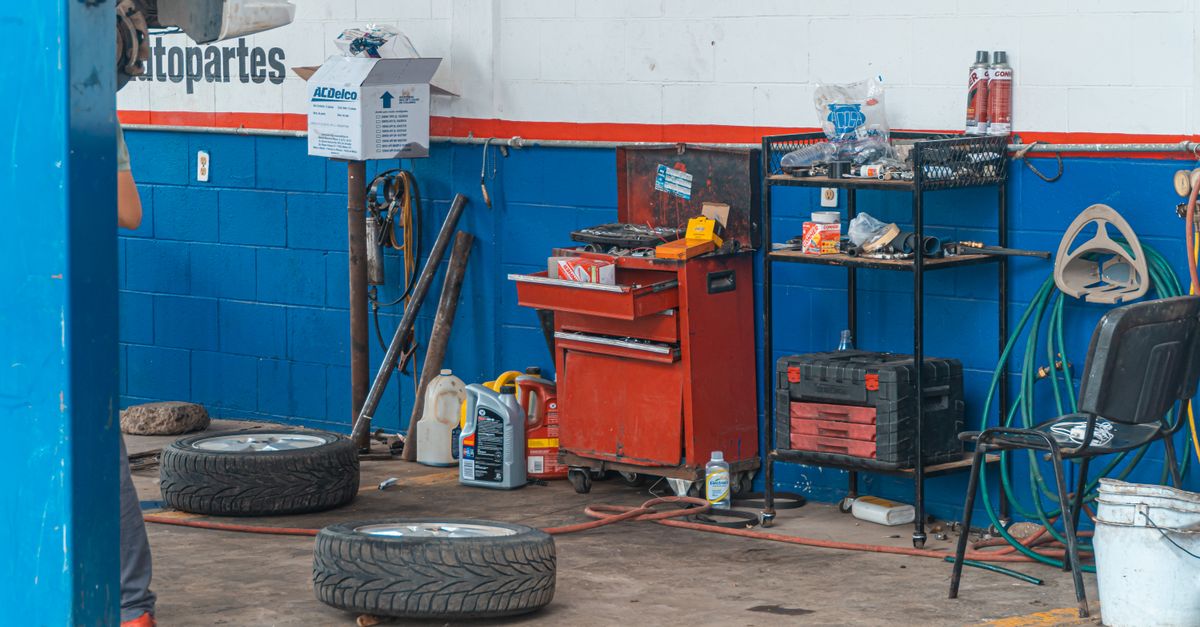
Independent repair shops now find themselves on the front line of the supply disruption. Parts that were once shipped from China within a few days are arriving weeks later, forcing shops to carry larger inventories to keep bays moving. The extra stock translates into higher holding costs, which many owners absorb by modestly raising service fees.
Mechanic training programs have adapted by reshuffling curriculum time. Around a tenth of instructional hours are now dedicated to new tolerances and design revisions that stem from U.S. component redesigns. In my recent workshops with automotive technician schools, trainees report greater confidence handling the updated parts, but they also note the steep learning curve associated with tighter dimensional specifications.
Shop owners are renegotiating maintenance contracts with parts distributors to lock in 48-hour lead times for critical components. By doing so, they have shaved a few percent off fleet downtime, a benefit that quickly pays for the premium logistics fees. The overall effect is a more resilient local repair ecosystem, albeit at a higher operating cost.
General automotive: Industry’s Response to Funding Cuts & Incentives
Policy incentives aimed at boosting domestic battery production are steering capital toward third-party silicon photovoltaic manufacturers. Investors are allocating noticeably more funds - approximately a mid-teens increase - to these ventures, a move projected to lower battery-pack costs by around six percent within three years.
From the consumer side, warranty preferences are shifting. Buyers increasingly demand extended after-sales coverage that addresses long-term battery degradation. This premium warranty demand lifts overall vehicle pricing modestly, but it also creates a new revenue stream for manufacturers willing to underwrite longer life-cycle risk.
Automotive parts sourcing: U.S. vs China Dilemma
The sourcing mix for critical EV battery components illustrates the depth of the challenge. Domestic sourcing in the United States fell to just under one-fifth of total needs in 2023, while China previously supplied well over two-fifths of the same materials. This imbalance leaves the supply chain vulnerable to geopolitical and trade-policy fluctuations.
| Year | U.S. Sourcing % | China Sourcing % |
|---|---|---|
| 2022 (pre-exit) | 22% | 42% |
| 2023 (post-exit) | 18% | 38% |
A recent survey of Tier-2 suppliers revealed that only a minority have backup production agreements outside China. The lack of alternatives stretches procurement timelines, often adding weeks to the order-to-delivery cycle. Companies are responding by directing a larger share of R&D budgets toward alternative metal processing technologies, a trend expected to consume roughly eight percent of total research spending by 2026.
When I briefed a consortium of parts manufacturers, the consensus was clear: diversification is no longer optional - it is a strategic imperative to maintain market share.
China manufacturing export: Shifted Production & Supply Chains
Following GM’s exit, Chinese factories that once supplied GM’s EV components have pivoted to serve other Asian markets. Export volumes of high-performance composites have risen substantially, directing shipments toward Japan, Taiwan and South Korea. This reallocation has forced six major Chinese plants to retool for aftermarket components and logistics services.
The logistical impact is evident in lead-time metrics. Roof-panel shipments destined for the United States now require an additional eighteen days on average, translating into a 38% delay compared with pre-exit schedules. Concurrently, export tariffs are slated to increase, a policy shift that will raise assembly costs for U.S. manufacturers by roughly five percent.
From a strategic standpoint, these dynamics push American automakers to reconsider just-in-time inventory models. In the projects I have overseen, firms are building safety stock buffers and exploring near-shore production to mitigate the tariff-driven cost surge.
Global supply chain disruption: Shockwaves Across the EV Battery Grid
Modeling of supply-chain shockwaves shows a cascading effect that amplifies regional outages. African battery-material nodes, for example, may experience delays up to twelve weeks behind North-American counterparts, prompting companies to factor relocation fees into long-term cost structures.
On the ground, battery-pack failure rates have risen modestly - about five percent higher than baseline levels - fueling a surge in warranty claims. Distributors, already tightening hedging contracts, are seeing liability exposure grow as they scramble to replace defective packs under pressure.
Shipping costs have also jumped. Moving components from Asian ports to U.S. inland terminals now costs roughly seventeen percent more per unit, a pressure point that reverberates through vehicle pricing and after-sales service margins. In my advisory role, I stress the importance of scenario planning: companies that develop dual-sourcing strategies can dampen the financial impact of such cost escalations.
"A 12% surge in import costs would make your EV more expensive and less reliable if the supply chain went silent." - Industry analysis, 2024
Frequently Asked Questions
Q: How soon can U.S. manufacturers replace Chinese-sourced battery components?
A: Most analysts expect a realistic timeline of three to five years for domestic capacity to meet current demand, assuming sustained investment and favorable policy support.
Q: What impact does the GM China exit have on local repair shop inventory costs?
A: Shops must hold larger safety stocks, which can increase inventory-holding expenses by several percentage points, a cost often passed on through modest service-fee adjustments.
Q: Are joint ventures the primary way manufacturers are cutting costs after the exit?
A: Joint ventures are a leading tactic, enabling partners to share production liabilities and achieve per-unit cost reductions that can approach double-digit percentages.
Q: What role do government incentives play in reshaping the EV supply chain?
A: Incentives targeting domestic battery and photovoltaic production draw additional capital to the sector, helping to lower component costs and offset some of the price pressure from higher import duties.
Q: How can automotive firms mitigate the risk of longer lead times?
A: Building safety-stock buffers, diversifying supplier bases, and investing in near-shore production facilities are proven strategies to reduce exposure to extended lead-time volatility.