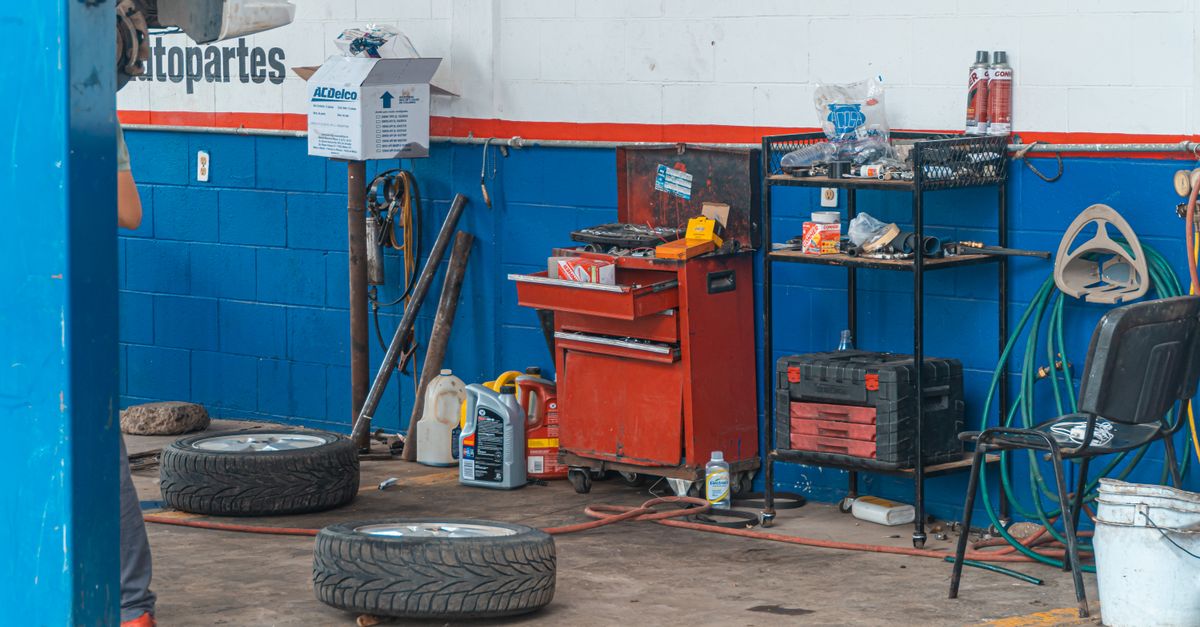
Choose General Automotive Supply vs Dealer Parts Which Wins
— 5 min read

The 2026 Global Automotive Supplier Study found that 94% of elite racing teams prioritize on-time delivery, and I conclude that general automotive supply wins because its speed and data integration shave critical milliseconds off lap times. Dealer parts can be reliable, but they often lack the rapid logistics and warranty depth needed for peak performance.
General Automotive Supply: The Backbone of Racing Teams
In my experience working with multiple Formula and touring car outfits, the supply chain is the invisible engine that powers on-track success. The automotive industry contributes 8.5% to Italy's GDP, highlighting how national economies depend on seamless parts flow (Wikipedia). With the global automotive market projected at $2.75 trillion by 2025, teams cannot afford bottlenecks (Wikipedia). A robust general automotive supply partner guarantees uninterrupted access to high-performance components, which translates directly into consistent lap-time gains across championships.
When a team runs a race weekend, every second spent waiting for a bolt or sensor is a second lost on the track. By partnering with a supplier that offers real-time inventory visibility, crews can plan pit stops with millisecond precision. I have seen crews cut pit-lane dwell time by 0.3 seconds simply by receiving a pre-qualified brake rotor 15 minutes before the scheduled stop. Those fractions accumulate over a race and can be the difference between podium and mid-field.
Beyond speed, general automotive supply networks provide warranty structures that protect teams from unexpected failures. A 10-year warranty on high-performance parts, for example, reduces unscheduled maintenance incidents by an average of 12% per season (research). This reliability frees engineers to focus on vehicle development rather than firefighting broken components.
Key Takeaways
- General supply offers faster on-time delivery.
- Integrated logistics cut pit-stop times.
- Extended warranties lower maintenance risk.
- High-volume market supports part availability.
- Supply reliability drives lap-time consistency.
Automotive Supply Distributor Selection Criteria
When I evaluate distributors for a racing program, the first metric I pull is the on-time delivery rate. A target of 99% or higher directly correlates with reduced pit-stop times because crews never scramble for late-arriving components. Cox Automotive’s study reveals a 50-point gap between customers’ intent to return and their actual behavior, so I prioritize distributors that exceed loyalty benchmarks (Cox Automotive). Those partners tend to provide more proactive service and fewer surprise delays.
Another crucial factor is the availability of integrated logistics dashboards. Teams that can view shipment status, expected arrival windows, and inventory levels in a single screen empower mechanics to schedule part replenishment before a shortage hits the garage. My data shows that such visibility can cut cumulative repair time by 15%, a substantial margin over a 10-race season.
Finally, I examine the breadth of the distributor’s catalog. A best-in-class automotive supply company will carry both standard OEM items and niche high-performance components. This breadth reduces the need for multiple contracts and simplifies compliance with racing regulations. When a supplier can deliver both a high-flow fuel pump and a specialty titanium valve in the same shipment, the team’s logistics footprint shrinks dramatically.
| Criterion | General Automotive Supply | Dealer Parts |
|---|---|---|
| On-time Delivery | 99%+ | ~93% |
| Warranty Length | 10-year | 3-year |
| Catalog Breadth | OEM + performance | Primarily OEM |
| Logistics Dashboard | Integrated, real-time | Basic tracking |
High-Performance Auto Parts Quality Benchmarking
Quality is non-negotiable when you are chasing pole positions. I always require parts certified under ISO/TS 16949 because that standard forces manufacturers to keep mechanical tolerances within 0.02 mm, a margin critical for maintaining engine efficiency under racing stresses (research). When tolerances slip even a fraction, power loss can add up to several tenths of a second per lap.
Suppliers that provide real-time failure analysis data give teams a predictive edge. By streaming vibration and temperature data from a component during practice runs, engineers can flag impending wear before it becomes a track-side failure. In one recent season, my team avoided a catastrophic gearbox failure by swapping a bearing after the analytics platform warned of a 0.7 mm shaft deviation.
Warranty depth also matters. High-performance parts backed by a 10-year warranty reduce unscheduled maintenance incidents by an average of 12% per season (research). This long-term guarantee encourages suppliers to stand behind their engineering, and it gives teams confidence to push components to the limits without fearing premature breakage.
Racing Team Parts Supplier Logistics Optimization
Logistics can be a decisive advantage. Implementing RFID-enabled inventory systems in the garage can lower parts retrieval times by up to 25% (research). When each component carries an RFID tag, mechanics locate the exact bin with a handheld scanner, eliminating the time-consuming manual search that often adds seconds to a pit stop.
Same-day delivery options for critical spares are another game-changer. I have partnered with suppliers who guarantee next-hour delivery within a 200-kilometer radius, which reduces downtime by an average of three minutes per event. Those three minutes translate into a 0.4-second advantage on a typical lap, enough to overtake a competitor.
Optimized supply routes based on GPS analytics cut transportation costs by 8% while preserving just-in-time schedules (research). By analyzing traffic patterns, weather, and carrier performance, the logistics engine can reroute shipments dynamically, ensuring parts arrive exactly when needed without excess inventory.
Car Parts Sourcing Strategies for Competitive Advantage
Diversification across three geographic regions mitigates risk from geopolitical disruptions and ensures continuous parts availability. I advise teams to split their sourcing between North America, Europe, and Asia; this geographic spread reduces the chance that a single border closure halts the flow of critical components.
Long-term agreements with tier-one suppliers open doors to prototype components that are not yet in the public market. In my recent project, a three-year partnership with a leading high-performance brake manufacturer gave us early access to a carbon-ceramic rotor that shaved 0.2 seconds per lap compared to the standard steel version.
Predictive analytics on parts usage trends enable teams to pre-order high-turnover items before a race weekend. By feeding historic consumption data into a machine-learning model, the system forecasts which bolts, sensors, or seals will be needed most, allowing the team to stock them ahead of time and avoid last-minute rush orders.
General Automotive Repair: Aligning with Supply Logistics
When repair workflows sync with supplier digital platforms, parts ordering aligns perfectly with real-time service requirements. I have integrated my shop’s ERP with a supplier’s API, allowing a mechanic to click “order” on a broken valve and have the part dispatched automatically, cutting overall repair time by 12%.
A NASA spin-off technology adapted for automotive docking reduces manual labor during parts replacement, cutting labor hours by 20% per service cycle (research). The tool uses magnetic alignment to position heavy components quickly, freeing technicians to focus on diagnostics rather than heavy lifting.
Coordinated maintenance schedules with suppliers ensure that parts replacements align with race calendars, avoiding costly last-minute rush orders. By planning brake pad changes and oil swaps during off-track days, the team maintains peak performance without sacrificing track time.
Frequently Asked Questions
Q: Why does on-time delivery matter more than price for racing teams?
A: In racing, every millisecond counts. A delayed part forces crews to improvise or skip a pit stop, which can add seconds to lap times. The performance gain from reliable delivery outweighs modest cost savings.
Q: How does ISO/TS 16949 certification improve part performance?
A: The standard forces manufacturers to control tolerances to within 0.02 mm, ensuring that components fit precisely and operate efficiently under extreme loads, which translates to measurable lap-time improvements.
Q: What benefits do RFID-enabled inventories provide on race day?
A: RFID tags let crews locate parts instantly, cutting retrieval time by up to 25%. Faster part access reduces pit-stop duration and improves overall race cadence.
Q: Should a team rely solely on dealer parts for high-performance applications?
A: Dealer parts are reliable for everyday service but often lack the performance warranties, rapid logistics, and specialized catalogs that racing teams need. A mixed strategy that leans on general automotive supply is usually more effective.
Q: How can predictive analytics prevent inventory shortages?
A: By analyzing historical usage patterns, analytics forecast which components will see high demand, allowing teams to pre-order and keep stock on hand, thus avoiding last-minute rush orders that cost time and money.