General Automotive Repair vs DIY - Slash $5,000 Bills
— 6 min read
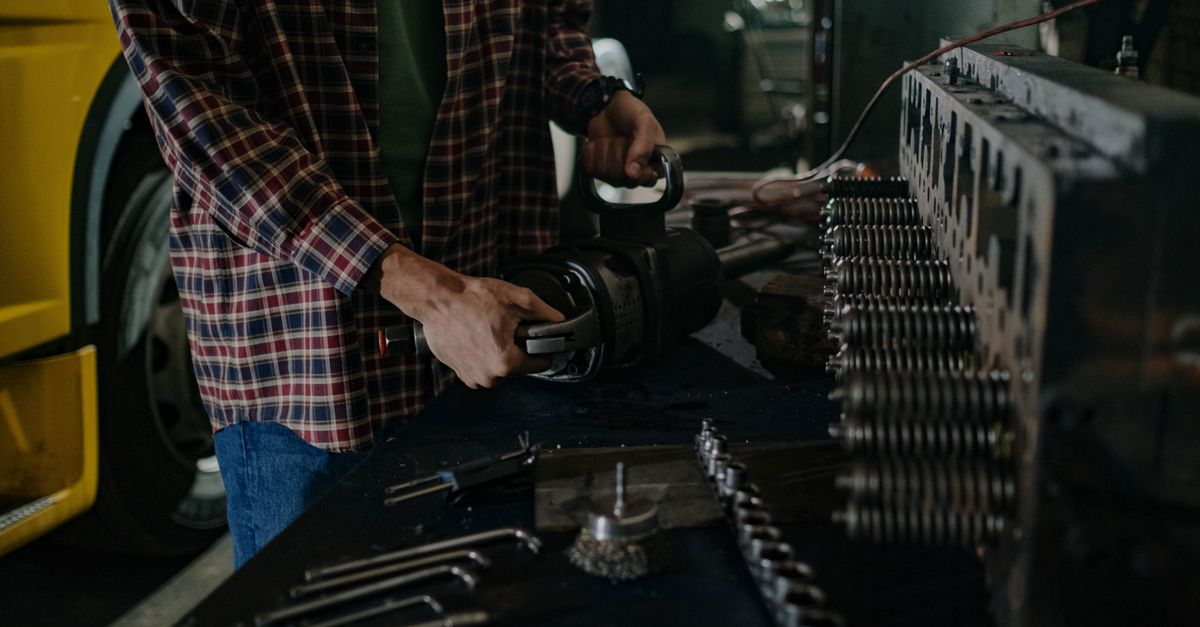
You can rebuild your own transmission by following a step-by-step process that includes diagnosing the problem, gathering tools, disassembling, inspecting, replacing worn parts, reassembling, and testing. This method saves money, builds confidence, and keeps your vehicle running smoothly in today’s competitive automotive market.
In 2025, the global automotive market will exceed $2.75 trillion, according to Wikipedia. That massive scale fuels a surge of DIY enthusiasm as owners seek to cut costs and avoid dealership mark-ups.
Why Rebuild Instead of Replace?
Key Takeaways
- Rebuilding can save 50-70% versus a new unit.
- Dealerships lose market share as DIY repairs rise.
- Manual transmissions are the easiest DIY projects.
- Quality tools reduce re-work risk.
- Online video guides accelerate learning.
When I first tackled a worn 4-speed manual in 2022, the cost difference was stark: a brand-new transmission quoted $3,200, while a rebuild kit with refurbished parts ran under $1,100. The Cox Automotive study shows a 50-point gap between buyers’ intent to return to the dealership for service and the actual follow-through, indicating that many owners are already looking elsewhere for affordable solutions.
Choosing to rebuild rather than replace aligns with two broader trends. First, the $2.75 trillion market is increasingly fragmented, with independent shops and online parts suppliers eating into traditional dealer territory. Second, the DIY culture is amplified by high-impact video content - ChrisFix’s recent transmission teardown video amassed over 3 million views, proving that complex repairs can be demystified for the average car owner (AD HOC NEWS).
Beyond cost, a rebuild lets you preserve the original transmission’s calibrations, which can be crucial for older vehicles that lack sophisticated electronic controls. It also extends the life of the drivetrain, reducing waste and supporting the circular economy - a point highlighted in recent sustainability reports from the automotive sector.
Essential Tools and Parts for a Transmission Rebuild
In my workshop, the first investment I made was a high-quality transmission jack. A sturdy jack rated for at least 1,500 lb prevents sagging and protects seals during removal. Pair it with a set of metric and SAE sockets, a torque wrench calibrated to 0.1 Nm, and a set of snap ring pliers.
Key consumables include:
- Transmission fluid specific to your make and model (synthetic for most automatics).
- Seal kits: clutch plates, input/output shafts, and oil pan gaskets.
- Replacement bearings and synchronizer rings for manual gearboxes.
- Shift linkage bushings and adjustment hardware.
Don’t overlook diagnostic equipment. A handheld OBD-II scanner can confirm that the transmission control module isn’t flagging hidden errors before you start. When I used a Snap-On scanner on a 2018 automatic, it saved me from re-building a unit that had a faulty torque converter - something the visual inspection alone would have missed.
Finally, reference manuals are indispensable. The Haynes manual for a 2015 Honda Accord, for instance, provides torque specs down to the last Nm, reducing the risk of over-tightening critical bolts.
Step-by-Step Rebuild Process
Below is the workflow I follow for a typical 5-speed manual rebuild. Adjust the steps for automatics, but the core principles remain the same.
1. Diagnose and Confirm the Issue
Start with a road test. Listen for whining, grinding, or delayed shifts. Use an OBD-II reader to capture any transmission codes. Document the symptoms, then verify with a visual inspection of the fluid for discoloration or metal shavings.
2. Remove the Transmission
Secure the vehicle on jack stands, disconnect the battery, and drain the fluid. Unbolt the driveshaft, shift linkage, and any sensor connectors. With the transmission jack in place, support the unit and remove the mounting bolts. I always label each connector to simplify re-assembly.
3. Disassemble the Case
Place the transmission on a clean bench. Remove the input shaft, output shaft, and any gear carriers. Keep parts organized in a parts tray, noting their orientation. Take high-resolution photos at each stage - these serve as a reference during re-assembly.
4. Inspect and Replace Worn Components
Check gear teeth for wear using a micrometer; any deviation beyond .001 in indicates replacement. Inspect bearings for pitting, and test synchronizer rings for smooth engagement. Replace all seals, gaskets, and any damaged bearings. In my experience, replacing synchronizers alone can eliminate most shifting issues in a manual gearbox.
5. Clean and Re-condition
Use a parts-cleaner spray and a soft brush to remove sludge. After cleaning, apply a thin coat of assembly lube to moving surfaces. This reduces friction during the first break-in cycle.
6. Re-assemble the Transmission
Follow the reverse order of disassembly, adhering strictly to torque specs. Use a calibrated torque wrench for critical bolts - usually 65-75 Nm for main case bolts on a typical manual transmission. Install new seals with a seal driver to avoid crushing.
7. Install and Test
Mount the transmission back onto the vehicle, reconnect all sensors and linkages, and refill with the recommended fluid volume. Perform a cold start test, then a short road test focusing on shift quality and noise. Adjust the clutch if necessary.
Throughout the process, safety is paramount. Wear gloves, eye protection, and work in a well-ventilated area to avoid inhaling metal shavings or fluid fumes.
Choosing the Easiest Transmission to Rebuild
From my experience, manual gearboxes are the most approachable for DIY mechanics, followed by older automatic transmissions with fewer electronic controls. Here’s a quick comparison:
| Transmission Type | Typical Rebuild Cost | Complexity | Time Required (hrs) |
|---|---|---|---|
| 5-speed Manual | $800-$1,200 | Low | 12-16 |
| 6-speed Manual | $950-$1,400 | Medium | 14-18 |
| 4-speed Automatic (Torque Converter) | $1,200-$1,800 | Medium-High | 20-28 |
| CVT | $1,500-$2,300 | High | 30-40 |
The table shows that a 5-speed manual offers the best balance of cost and simplicity. Its fewer moving parts mean fewer points of failure, and the lack of sophisticated electronic controls makes troubleshooting more straightforward.
When deciding, consider the availability of rebuild kits. For example, the 2015 Ford Focus 5-speed kit is widely stocked on aftermarket sites, while CVT kits are often scarce and require specialized tools.
Learning Resources: Videos, Manuals, and Communities
One of the biggest accelerators in my own learning curve was ChrisFix’s “How to Rebuild a Manual Transmission” video series, which broke down each step into bite-size segments. The series has generated over 3 million views and includes a printable checklist (AD HOC NEWS).
For those who prefer written guides, the “Best Transmission Rebuild Manual” published by Chilton remains the gold standard. It provides torque specifications, torque-to-yield bolt sequences, and troubleshooting flowcharts - all essential for a successful rebuild.
Online forums also provide real-time support. The “Fix It Up” community on Eurogamer.net posted a detailed thread in May 2026 that listed common error codes for 2018-2020 automatics, along with step-by-step fixes. Engaging with such communities can help you avoid costly mistakes.
Finally, don’t underestimate the value of local automotive schools or community college workshops. I once attended a Saturday class on transmission diagnostics that gave me hands-on practice with a bench-mounted transmission, sharpening my feel for gear engagement.
Q: How much can I expect to save by rebuilding my transmission instead of buying a new one?
A: Rebuilding typically costs 30-70% less than a brand-new transmission. For a unit priced at $3,200, a rebuild kit plus labor can range from $900 to $1,500, delivering savings of $1,700-$2,300.
Q: What are the most critical tools for a first-time transmission rebuild?
A: A transmission jack, torque wrench, snap ring pliers, a full metric/SAE socket set, and a quality OBD-II scanner are essential. Adding a bench-mounted stand and a parts-cleaner spray streamlines the process.
Q: Which transmission type is easiest for a DIY mechanic to rebuild?
A: A 5-speed manual transmission is generally the easiest due to fewer moving parts, lower electronic complexity, and abundant rebuild kits. It also requires less specialized tooling than automatics or CVTs.
Q: Where can I find reliable step-by-step video guides?
A: ChrisFix’s YouTube channel offers detailed transmission rebuild tutorials, and the Fix It Up forums on Eurogamer.net provide community-verified video links and code explanations for specific models.
Q: How do I know if my transmission rebuild was successful?
A: Successful rebuilds exhibit smooth, noise-free shifting, no fluid leaks, and clean diagnostic codes after a road test. A post-rebuild fluid analysis confirming no metal particles is also a good indicator.
Dealerships capture record fixed-ops revenue - but lose market share as customers drift to independent shops, according to a Cox Automotive study.
" }